
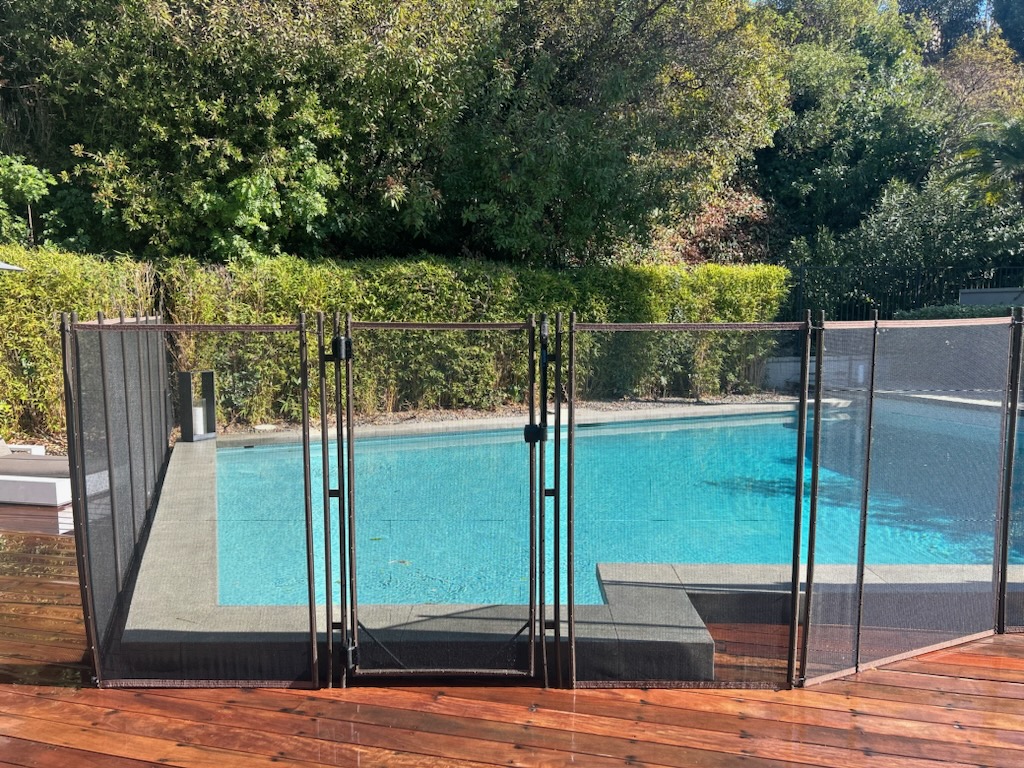
When you look at the cost of home improvements, the labor charge is often the first thing homeowners try to cut. With YouTube tutorials and rental shops offering professional-grade tools, it is tempting to think that installing your own pool safety fence is just another weekend project. However, a pool fence is not like painting a room or laying down mulch. It is a life-saving device where the margin for error is zero. If a bookshelf is slightly unlevel, it’s an eyesore; if a pool fence is slightly off-tension, it’s a failure that could have tragic consequences. Understanding the technical demands of this job is the only way to decide if saving a few hundred dollars is worth the potential risk.
The Engineering Behind the Tension
A mesh pool fence does not stand up because of heavy posts or bolts. It stands up because of “bilateral tension.” The mesh panels are pulled tight between the poles, and those poles are set into the ground at very specific angles. If you drill the holes perfectly vertical, the fence will eventually sag, and the mesh will lose its tautness. Professional installers are trained to “lean” the drill at a slight three-degree angle away from the pool. This creates the tension needed to keep the fence rigid so a child cannot lift the bottom of the mesh or lean on a pole and knock it over. Achieving this specific geometry across forty or fifty holes is much harder than it looks on paper.
The Nightmare of Drilling into Concrete
To install a standard pool fence, you have to drill dozens of holes into your pool deck, which is usually made of reinforced concrete, pavers, or stone. This requires a core drill, which is a heavy, powerful machine that uses a diamond-tipped bit. If you have never used a core drill, you are in for a challenge. These drills can kick back violently if they hit rebar or a large piece of aggregate. If the drill slips, you will leave a permanent scar across your expensive pool deck. Furthermore, if you drill a hole in the wrong spot, there is no “undo” button. You are left with a hole that must be patched, and it will never perfectly match the rest of your patio.
Navigating Underground Hazards
The area directly surrounding a swimming pool is a maze of underground infrastructure. You have PVC pipes for the filtration system, electrical lines for the pool lights, and often gas lines for a heater or an outdoor grill. A professional installer knows how to “read” a pool deck to estimate where these lines are buried. They also have the experience to feel the drill’s resistance and know when to stop before piercing a pipe. If a DIYer accidentally drills through a main return line or hits a 220-volt electrical conduit, the cost of the repair will be five times higher than what they would have paid for a professional installation in the first place.
The Complexity of the Self-Closing Gate
The gate is the most critical part of the entire safety system, and it is also the most difficult to install correctly. A safety gate must be perfectly plumb and level to ensure that the magnetic latch catches every single time it swings shut. Even a fraction of an inch of misalignment can cause the gate to stick open or fail to lock. Professional installers spend a significant portion of the job just fine-tuning the gate hinges and the latch height. They understand how temperature changes and the “settling” of the fence will affect the gate over time, and they adjust the tension accordingly. A DIY gate that “usually” closes is not a safety gate; it’s a false sense of security.
The Value of Specialized Tools
While you can rent a core drill from a local hardware store, the rental units are often beat up, dull, and difficult to calibrate. Professional pool fence companies use custom-made drill rigs and high-performance diamond bits that create clean, surgical holes without cracking the surrounding stone. They also use specialized “sleeve” materials that are designed to withstand the chemicals and moisture found near a pool. When you hire a pro, you aren’t just paying for their time; you are paying for the thousands of dollars they have invested in the right equipment to do the job without damaging your property.
Hidden Costs of the DIY Route
When you tally up the “savings” of doing it yourself, you have to look at more than just the labor quote. You have to account for the rental fee of the drill, the cost of the diamond bits (which you often have to pay for if you wear them down), the price of the fencing material itself, and the value of your own time. Most importantly, you have to account for the risk of “buyer’s remorse” if the fence looks crooked or flimsy when you’re finished. Many professional companies are called in every year to “fix” DIY disasters where the homeowner ended up spending more money to have the old holes patched and new ones drilled correctly.
The Insurance and Liability Factor
In many jurisdictions, a pool fence must meet specific building codes to be considered “compliant.” If you install the fence yourself and it doesn’t meet the height, gap, or latch requirements of your local code, you could face fines or issues with your homeowner’s insurance. If an accident were to occur, an uncertified or improperly installed fence could lead to massive legal liabilities. Professional installers are familiar with local codes and provide a finished product that is guaranteed to pass inspection. They also carry their own liability insurance, so if they happen to hit a pipe or crack a tile, the cost of the repair is on them, not you.
Why Experience Matters with “No Holes” Systems

Even if you choose a “No Holes” water-base system, professional installation is still beneficial. A pro knows how to layout the bases to maximize the tension of the mesh and ensure there are no gaps where the fence meets the house or a perimeter wall. They can also ensure that the layout is aesthetically pleasing, following the curves of the pool rather than looking like a jagged, uneven line. While the “No Holes” system is more DIY-friendly than the drilled version, a professional eye ensures that the final result is as secure as possible.
Peace of Mind is the Goal
Ultimately, the reason you are installing a pool fence is to stop worrying. If you do it yourself, every time you hear a noise outside or see a child near the fence, a small part of you will wonder: Did I drill that hole deep enough? Is that latch really secure? Did I use the right tension? When a professional handles the job, that doubt disappears. You get a warranty on the labor, a guarantee on the safety, and the knowledge that the barrier was built by someone who does this every single day.
Making the Final Decision
If you are a highly skilled contractor with experience in masonry and tension-based systems, you might be able to pull off a DIY installation. But for 95% of homeowners, the risks—both financial and physical, far outweigh the savings. A pool fence is a one-time investment that protects your family for years. Doing it right the first time ensures that your backyard remains a place of relaxation rather than a construction site or, worse, a hazard. Hiring a professional is the only way to ensure that when the gate clicks shut, your family is truly safe.
Get a Free Estimate

How Often Should A Swimming Pool Be Cleaned?
Maintaining a backyard swimming pool in Las Vegas requires a structured, multi-tier routine rather than Read More >>>
When you look at the cost of home improvements, the labor charge is often the first thing homeowners try to cut. With YouTube tutorials and rental shops offering professional-grade tools, it is tempting to think that installing your own pool safety fence is just another weekend project. However, a pool fence is not like painting a room or laying down mulch. It is a life-saving device where the margin for error is zero. If a bookshelf is slightly unlevel, it’s an eyesore; if a pool fence is slightly off-tension, it’s a failure that could have tragic consequences. Understanding the technical demands of this job is the only way to decide if saving a few hundred dollars is worth the potential risk.
The Engineering Behind the Tension
A mesh pool fence does not stand up because of heavy posts or bolts. It stands up because of “bilateral tension.” The mesh panels are pulled tight between the poles, and those poles are set into the ground at very specific angles. If you drill the holes perfectly vertical, the fence will eventually sag, and the mesh will lose its tautness. Professional installers are trained to “lean” the drill at a slight three-degree angle away from the pool. This creates the tension needed to keep the fence rigid so a child cannot lift the bottom of the mesh or lean on a pole and knock it over. Achieving this specific geometry across forty or fifty holes is much harder than it looks on paper.
The Nightmare of Drilling into Concrete
To install a standard pool fence, you have to drill dozens of holes into your pool deck, which is usually made of reinforced concrete, pavers, or stone. This requires a core drill, which is a heavy, powerful machine that uses a diamond-tipped bit. If you have never used a core drill, you are in for a challenge. These drills can kick back violently if they hit rebar or a large piece of aggregate. If the drill slips, you will leave a permanent scar across your expensive pool deck. Furthermore, if you drill a hole in the wrong spot, there is no “undo” button. You are left with a hole that must be patched, and it will never perfectly match the rest of your patio.
Navigating Underground Hazards
The area directly surrounding a swimming pool is a maze of underground infrastructure. You have PVC pipes for the filtration system, electrical lines for the pool lights, and often gas lines for a heater or an outdoor grill. A professional installer knows how to “read” a pool deck to estimate where these lines are buried. They also have the experience to feel the drill’s resistance and know when to stop before piercing a pipe. If a DIYer accidentally drills through a main return line or hits a 220-volt electrical conduit, the cost of the repair will be five times higher than what they would have paid for a professional installation in the first place.
The Complexity of the Self-Closing Gate
The gate is the most critical part of the entire safety system, and it is also the most difficult to install correctly. A safety gate must be perfectly plumb and level to ensure that the magnetic latch catches every single time it swings shut. Even a fraction of an inch of misalignment can cause the gate to stick open or fail to lock. Professional installers spend a significant portion of the job just fine-tuning the gate hinges and the latch height. They understand how temperature changes and the “settling” of the fence will affect the gate over time, and they adjust the tension accordingly. A DIY gate that “usually” closes is not a safety gate; it’s a false sense of security.
The Value of Specialized Tools
While you can rent a core drill from a local hardware store, the rental units are often beat up, dull, and difficult to calibrate. Professional pool fence companies use custom-made drill rigs and high-performance diamond bits that create clean, surgical holes without cracking the surrounding stone. They also use specialized “sleeve” materials that are designed to withstand the chemicals and moisture found near a pool. When you hire a pro, you aren’t just paying for their time; you are paying for the thousands of dollars they have invested in the right equipment to do the job without damaging your property.
Hidden Costs of the DIY Route
When you tally up the “savings” of doing it yourself, you have to look at more than just the labor quote. You have to account for the rental fee of the drill, the cost of the diamond bits (which you often have to pay for if you wear them down), the price of the fencing material itself, and the value of your own time. Most importantly, you have to account for the risk of “buyer’s remorse” if the fence looks crooked or flimsy when you’re finished. Many professional companies are called in every year to “fix” DIY disasters where the homeowner ended up spending more money to have the old holes patched and new ones drilled correctly.
The Insurance and Liability Factor
In many jurisdictions, a pool fence must meet specific building codes to be considered “compliant.” If you install the fence yourself and it doesn’t meet the height, gap, or latch requirements of your local code, you could face fines or issues with your homeowner’s insurance. If an accident were to occur, an uncertified or improperly installed fence could lead to massive legal liabilities. Professional installers are familiar with local codes and provide a finished product that is guaranteed to pass inspection. They also carry their own liability insurance, so if they happen to hit a pipe or crack a tile, the cost of the repair is on them, not you.
Why Experience Matters with “No Holes” Systems
Even if you choose a “No Holes” water-base system, professional installation is still beneficial. A pro knows how to layout the bases to maximize the tension of the mesh and ensure there are no gaps where the fence meets the house or a perimeter wall. They can also ensure that the layout is aesthetically pleasing, following the curves of the pool rather than looking like a jagged, uneven line. While the “No Holes” system is more DIY-friendly than the drilled version, a professional eye ensures that the final result is as secure as possible.
Peace of Mind is the Goal
Ultimately, the reason you are installing a pool fence is to stop worrying. If you do it yourself, every time you hear a noise outside or see a child near the fence, a small part of you will wonder: Did I drill that hole deep enough? Is that latch really secure? Did I use the right tension? When a professional handles the job, that doubt disappears. You get a warranty on the labor, a guarantee on the safety, and the knowledge that the barrier was built by someone who does this every single day.
Making the Final Decision
If you are a highly skilled contractor with experience in masonry and tension-based systems, you might be able to pull off a DIY installation. But for 95% of homeowners, the risks—both financial and physical, far outweigh the savings. A pool fence is a one-time investment that protects your family for years. Doing it right the first time ensures that your backyard remains a place of relaxation rather than a construction site or, worse, a hazard. Hiring a professional is the only way to ensure that when the gate clicks shut, your family is truly safe.
Get a Free Estimate
How Often Should A Swimming Pool Be Cleaned?
Maintaining a backyard swimming pool in Las Vegas requires a structured, multi-tier routine rather than Read More >>>


